
Winter property planning · Colorado
El Niño and Colorado Snow: A Commercial Property Winter Plan
El Niño can influence Colorado weather, but it cannot tell a property manager when a particular parking lot will need plowing. Use seasonal outlooks to prepare, local forecasts to make storm decisions, and a site-specific agreement to define commercial snow-removal service. Confirm coverage and availability with MD Asphalt before relying on a winter service plan.
| Information | Useful for | Does not establish |
|---|---|---|
| El Niño and seasonal outlooks | Reviewing winter readiness and contingency budgets | Snowfall totals or service dates for an individual lot |
| Local NWS forecasts and warnings | Preparing for an approaching storm | A contractor's dispatch commitment |
| Property snow-service agreement | Defining work areas, priorities, and communication | Identical conditions at every property |
| Site observations | Reporting access problems and changing conditions | A guarantee that cleared pavement will stay clear |
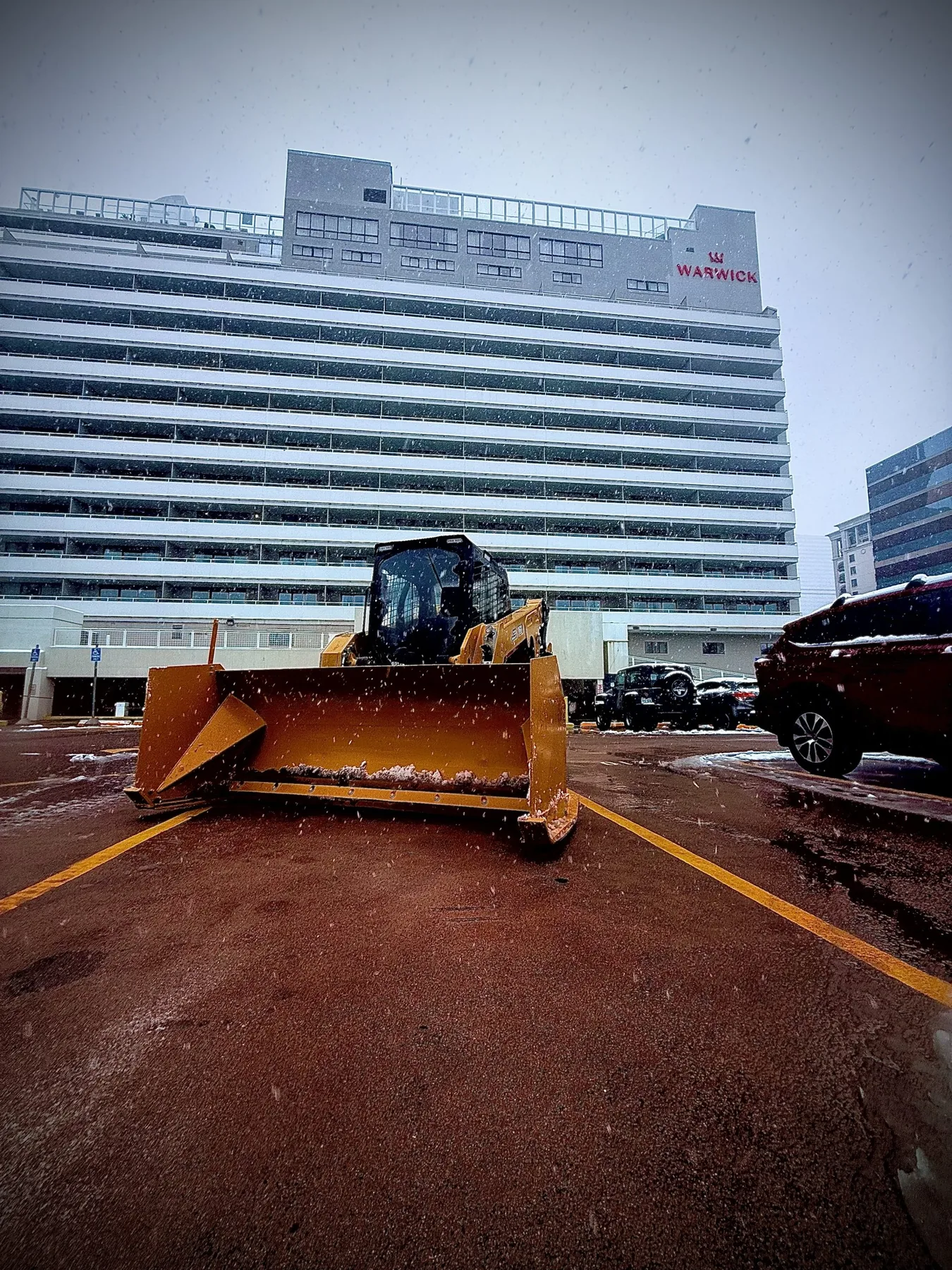
Does El Niño mean more snow for a Colorado parking lot?
El Niño does not guarantee a snowier winter at a particular Colorado property. The Colorado Climate Center describes a stronger connection to wetter fall and spring conditions than to statewide peak snowpack. Its September 2026 analysis also notes a tendency toward large spring snowstorms along the Front Range and Eastern Plains, while emphasizing the wide range of possible outcomes.
For business planning, keep mountain snowpack, regional precipitation, and parking lot accumulation separate. None is an interchangeable measure of the work needed at a Denver retail center or Fort Lupton facility. Read the Colorado Climate Center's explanation for the climate context.
The practical question is whether the property has a workable response when snow affects access. Review that response before a storm becomes the reason to discover missing contacts, unclear work boundaries, or a snow-storage area that blocks a delivery route. Preparation remains useful across a range of seasonal outcomes, including a winter with long quiet periods between events.
What does the latest winter outlook actually say?
NOAA's October 15, 2026 U.S. Winter Outlook describes how El Niño is influencing the coming winter. It expresses probabilities for broad temperature and precipitation categories, not snowfall totals for individual properties. Check the issue date when reading an outlook; a seasonal article should not substitute for a current local forecast.
That distinction matters when approving a contract or budget. A precipitation outlook cannot establish how many plow visits a site will need, when they will occur, or how the contractor will charge. Separate weather expectations from the service terms offered for your property. Read NOAA's winter outlook alongside its explanation of forecast limits.
For an approaching event, review the local forecast and alerts from NWS Denver/Boulder. Identify who on the property team will monitor updates, who can approve changes, and how the contractor receives reports from the site. A forecast update is useful only if someone has responsibility for acting on it.
Which access routes should commercial properties identify first?
Start with the routes people must use, then agree on their priority with the contractor. A property map should identify entrances, drive aisles, loading approaches, pedestrian routes, and areas serving accessible parking. Explain when employees arrive, when customers visit, and when deliveries occur. Those operating requirements give the service discussion a clearer purpose than simply asking to clear the lot.
Retail properties should identify storefront access and where delivery vehicles cross customer traffic. Industrial sites should record gates, loading approaches, shift changes, and spaces that cannot accommodate stored snow. For a property with several tenants, ask each tenant to name access needs before agreeing to one shared plan. Resolve conflicts while the map is visible to everyone.
Mark areas that belong to a neighboring property or another service provider. An entrance may connect to a public road, shared drive, or separately managed walkway. Confirm responsibility for those boundaries instead of assuming one contractor handles everything visible from the parking lot. Keep the final marked plan with the agreement and give the site contact a copy.
Where can snow be stored without creating another access problem?
Discuss storage locations during the site review. Show the contractor drains, islands, curbs, utility features, pedestrian routes, loading areas, and sight lines at entrances. An unused row of parking spaces is only a proposed storage location until the people responsible for the property have reviewed how it affects operations.
Photograph existing features before snow obscures them. Record wheel stops, damaged pavement edges, low structures, and anything equipment operators need to locate. Ask how those features will be marked and how a change to the storage plan will be approved. A site with little open space may need a different operating arrangement from a large lot with spare capacity.
Clarify what happens if the agreed storage area becomes insufficient. Ask whether relocation or hauling can be discussed, whether it is included, and how extra work would be priced and authorized. Do not assume MD Asphalt supplies every possible winter service at every address. The proposal should name the work offered for that property and make exclusions clear before service begins.
What belongs in a commercial snow-removal agreement?
A useful agreement identifies the property, included work areas, service-start arrangements, priorities, and communication process. Ask how the contractor determines that work should begin and which observations or conditions matter. Confirm whether the property contact must request service or whether another arrangement applies. Record the answer in the agreement.
Discuss service windows and return visits during continuing or changing conditions. Make clear which expectations are commitments and which depend on access, weather, or the agreed scope. A broad phrase such as seasonal service does not answer how blocked gates, parked vehicles, or an inaccessible loading area will be handled. Name the person who can resolve those issues.
Review the pricing basis, included activities, exclusions, and process for approving additional work. Lot clearing, pedestrian-area work, ice treatment, relocation, and hauling should not be treated as interchangeable services. Ask which are available and included. Keep a backup contact and current access instructions with the agreement so the plan remains usable when the usual manager is unavailable.
How can a property manager prepare a budget without predicting snowfall?
Budget from the proposed service terms and the consequences of access disruption. Ask how charges are calculated and what circumstances can create additional costs. Compare proposals using the same property map and operating requirements. Two totals are hard to compare when one proposal includes areas or activities the other leaves out.
Separate the base agreement from potential additional work. Discuss how the property would authorize a change if parking arrangements shift, the storage area fills, or a tenant needs a different access window. An agreed approval process helps ownership understand what the budget covers without pretending the season can be predicted in advance.
Avoid turning a headline about a strong El Niño into a fixed estimate of billable events. Keep any internal planning scenarios labeled as assumptions. Ask the contractor to explain the actual pricing and service model being offered, then review that proposal against the property's needs. The purpose is a manageable agreement, not a wager on a seasonal snowfall total.
What would a practical pre-storm walkthrough look like?
Consider an illustrative retail property with two entrances, a shared customer lot, a rear loading approach, and a pedestrian route to the storefronts. This is a planning example, not a completed MD Asphalt project. Start by labeling those areas on one map. Identify when each route is used and who controls access to it.
Suppose early deliveries use the rear entrance while customer traffic arrives later. That difference creates a priority question for the contractor; it does not establish an automatic service sequence. Discuss equipment access, parked vehicles, work boundaries, and whether the proposed priorities can be supported under the agreement. Record the agreed arrangement after the review.
Next, locate the proposed snow-storage area and check it against loading access, pedestrian movement, and parking needs. Confirm who will report a blocked route and who can approve additional work. Finish by distributing the map and contact details. The walkthrough succeeds when the property and contractor share the same instructions, including what remains outside the scope.
How should Denver and Front Range teams plan beyond the first storm?
Keep the service plan current as property use changes. New tenants, revised delivery windows, construction, temporary fencing, and stored equipment can change the routes the contractor can reach. Tell the service contact about those changes before the next event, and update the marked map rather than relying on a verbal message that may not reach everyone.
After work, record any access concerns with a location and current photo. Separate a request for additional work from a question about the completed scope. Keep the agreed reporting process available to staff so the contractor receives clear information instead of several conflicting instructions from different people on site.
MD Asphalt is based in Fort Lupton. To discuss commercial snow removal, send the property address, approximate lot size, operating hours, site photos, and priority access requirements. Confirm snow-service coverage and seasonal capacity for that address. Statewide travel for larger paving projects does not establish statewide snow-removal availability. Property managers can also review planning for occupied commercial properties when coordinating winter access with longer-term pavement work.
Common questions
Will El Niño guarantee more snow in Denver?
No. A seasonal climate pattern cannot establish snowfall at a particular property. Use the Colorado Climate Center for regional context and current National Weather Service forecasts for approaching events.
When should I discuss a seasonal snow-removal agreement?
Contact the contractor before you need to rely on service. Allow time to confirm address coverage, capacity, included areas, operating priorities, pricing, and access instructions. An inquiry does not confirm dispatch or reserve service.
Does a parking lot snow agreement include sidewalks and ice treatment?
Only when the proposed scope says so. Ask separately about pedestrian routes, ice treatment, snow relocation, and hauling, including availability and charges. Confirm the work included for your property in writing.