
Service 03 / Denver & Front Range
Asphalt Milling & Overlay in Colorado
Prepare worn parking lots and roads for resurfacing with a milling scope based on pavement condition and finished elevations. MD Asphalt serves Denver and the Front Range, with statewide travel for larger projects.
Why it matters
A strong surface is a system—not just a top layer
Preserve suitable base material
Correct elevations and surface irregularities
Create clean tie-ins at concrete and drains
Prepare pavement for a strong overlay bond
Asphalt milling contractors for parking lots and roads
Milling removes a specified depth of existing asphalt. For a resurfacing project, it can create room for the new pavement layer at curbs, drainage structures, entrances, and adjoining surfaces.
The right scope starts with the existing pavement and the work that follows. Share the area, surface concerns, vehicle use, and any project drawings so removal limits, preparation, and paving requirements can be reviewed together.
What is mill and overlay?
Mill and overlay combines removal of existing surface asphalt with placement of a new asphalt layer. It may suit pavement whose supporting structure remains serviceable, subject to assessment and any necessary repairs.
Milling is one part of the resurfacing scope. The proposal should address the condition left after removal, surface preparation, transitions, and the overlay that follows. See parking lot paving and resurfacing for the broader paving scope.
Define the removal and finished surface
Milling depth and work limits
The required depth depends on the existing pavement, proposed work, and finished elevations. Identify the area to be milled and confirm how depth changes or unexpected conditions will be handled. A single standard depth should not be assumed for every property.
Curbs, drains, and entrances
Review tie-ins at gutters, drainage inlets, utility covers, concrete aprons, and entrances. Include any details from the project plans that affect the new pavement level. Discuss these transitions before milling and paving are scheduled.
Surface and drainage concerns
Point out rutting, uneven areas, standing water, and previous failures. The cause of the problem matters when deciding what milling can address and whether other repairs or grading work belong in the project.
Is the pavement suitable for milling and overlay?
A condition assessment helps distinguish surface wear from problems that need deeper correction. Share where the damage occurs, how long it has been present, and whether previous repairs have held up.
Areas of cracking, settlement, or rutting need evaluation before an overlay is selected. Do not treat a visible crack pattern alone as proof that the supporting pavement is sound.
Isolated failures may require targeted repairs within a larger resurfacing scope. More extensive problems may lead to a different recommendation. Compare the proposed work and its assumptions before choosing a treatment.
Milling on occupied properties
Commercial lots and roads need an access plan alongside the removal plan. Identify tenant entrances, delivery routes, resident access, pedestrian areas, and equipment staging needs.
Phased work may be possible where the site and scope allow it. Confirm closures and traffic arrangements between milling and paving, including any temporary transitions. Reopening depends on the work performed and the conditions at the site.
- Property managers: Share operating hours, tenant access, and proposal deadlines. See property-management services.
- HOAs: Provide shared-road dimensions, resident access requirements, and board review dates. See HOA projects.
- Industrial sites: Identify truck routes, loading areas, and shift or delivery windows.
- Road projects: Supply plans, specifications, work limits, and traffic requirements. See road paving and resurfacing.
Road & Highway Milling
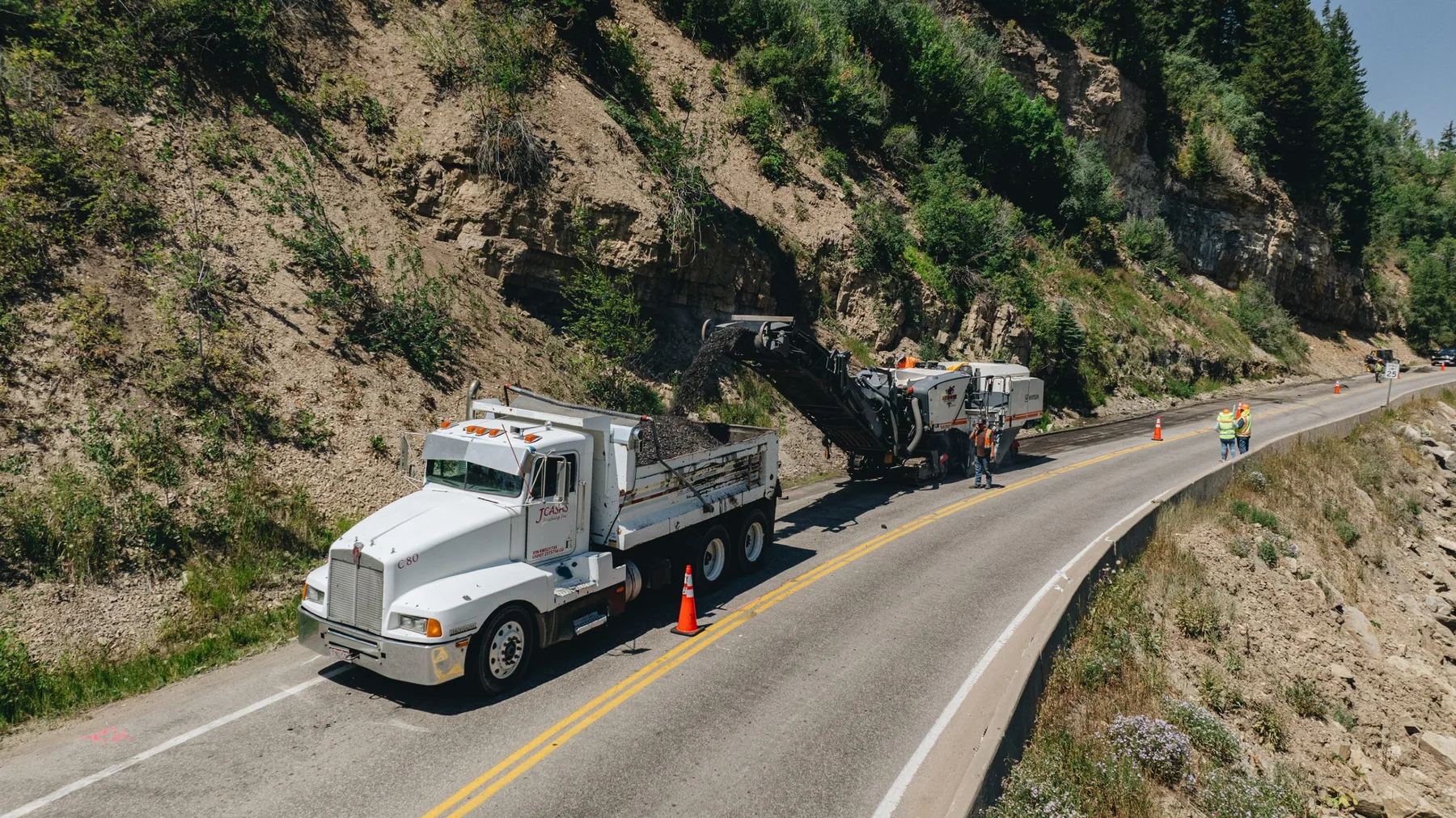
The mountain corridor project shown on this page illustrates surface removal beside changing terrain and constrained access. Send road plans, specifications, work limits, and traffic requirements so milling and the paving that follows can be reviewed together.
Explore road paving and resurfacing ↗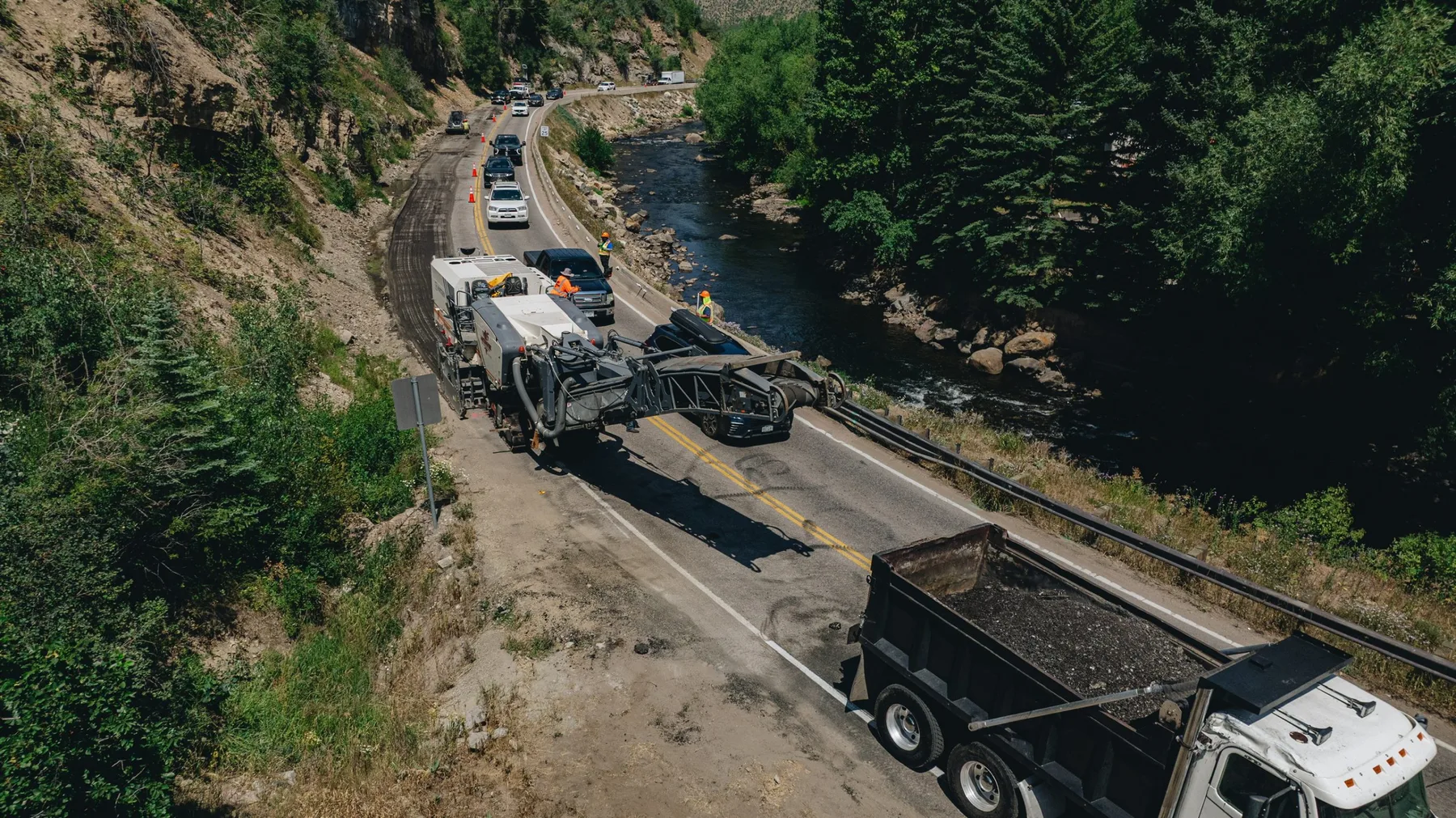
When to call
Watch for these surface signals
- Worn pavement with a stable base
- Poor transitions at doors or curbs
- Surface drainage issues
- A parking lot ready for resurfacing
The work
A controlled process and a clean result
We confirm access, surface conditions, and sequence before the crew starts so the site knows what to expect.
Review the site and specifications
Identify the work limits, pavement concerns, utility structures, surface transitions, and access requirements.
Define the milling scope
Confirm removal depths and the sequence of work with the proposed overlay or subsequent construction.
Plan preparation and repairs
Establish the cleaning, condition review, and corrective work required before new asphalt placement.
Coordinate the overlay
Review the paving specification, bonding preparation, placement, and compaction requirements with the contractor responsible for that work.
Confirm reopening and markings
Discuss traffic restrictions, surface transitions during construction, and final striping or roadway markings.
Common questions
Know before you schedule
01How does milling differ from full reconstruction?+
Milling removes asphalt to a specified depth as part of the planned work. Reconstruction involves a broader replacement scope and may include supporting layers. The assessment and project requirements determine which approach is appropriate.
02How deep will you mill our parking lot?+
The depth is project-specific. It needs to account for the existing pavement, proposed overlay, and required elevations at adjoining structures. Confirm the removal depth in the scope rather than assuming a standard number of inches.
03What happens to the removed asphalt?+
Ask how collection, hauling, and the destination of the removed material are included in your proposal. If you have reuse or disposal requirements, provide them before the scope is finalized so the arrangements can be confirmed.
04Will milling affect curbs or drainage inlets?+
Those interfaces should be reviewed when setting milling limits and finished elevations. Share known drainage problems and relevant plans so transitions and any related work can be included in the assessment.
05Is mill and overlay always cheaper than replacement?+
Compare the complete scopes for your property. Removal, repairs, preparation, access constraints, and the required finished pavement all affect cost. Compare the complete proposal and pavement assessment before selecting an overlay or replacement.
Colorado service coverage
Asphalt Milling for Denver & Front Range properties
MD Asphalt coordinates asphalt milling from Fort Lupton for Denver Metro properties and the surrounding Front Range. Review coverage in Frederick, Longmont, Boulder, and Northern Colorado.
Include the property address, photos of the pavement, traffic needs, and target schedule when requesting an assessment. Location, scope, surface condition, and work windows help determine the project plan.
Explore our Colorado service-area guide or review commercial project planning for parking lots, shared roads, and active facilities. We travel throughout Colorado for larger projects after reviewing the location, approximate size, scope, and schedule.
Start your project
Ready to talk asphalt milling?
Tell us what you’re seeing. We’ll help identify the right next step for your property.