
Pavement problems · Colorado
Recurring Parking Lot Potholes: When Patching Is Enough
When a pothole returns, document the location, prior repair, surrounding cracks, and nearby water before ordering the same patch again. The cause may involve drainage, support, traffic, or the repair itself. MD Asphalt evaluates damaged pavement for Denver and Front Range properties, with larger repair and paving scopes considered across Colorado.
| Observation | Question to investigate |
|---|---|
| The same patch keeps breaking | Was the full failed area and its support addressed? |
| Water collects nearby | Where is the water coming from, and can it drain? |
| Damage follows a truck path | Does the pavement suit the traffic using it? |
| Failures spread beyond one location | Is a broader condition assessment needed? |
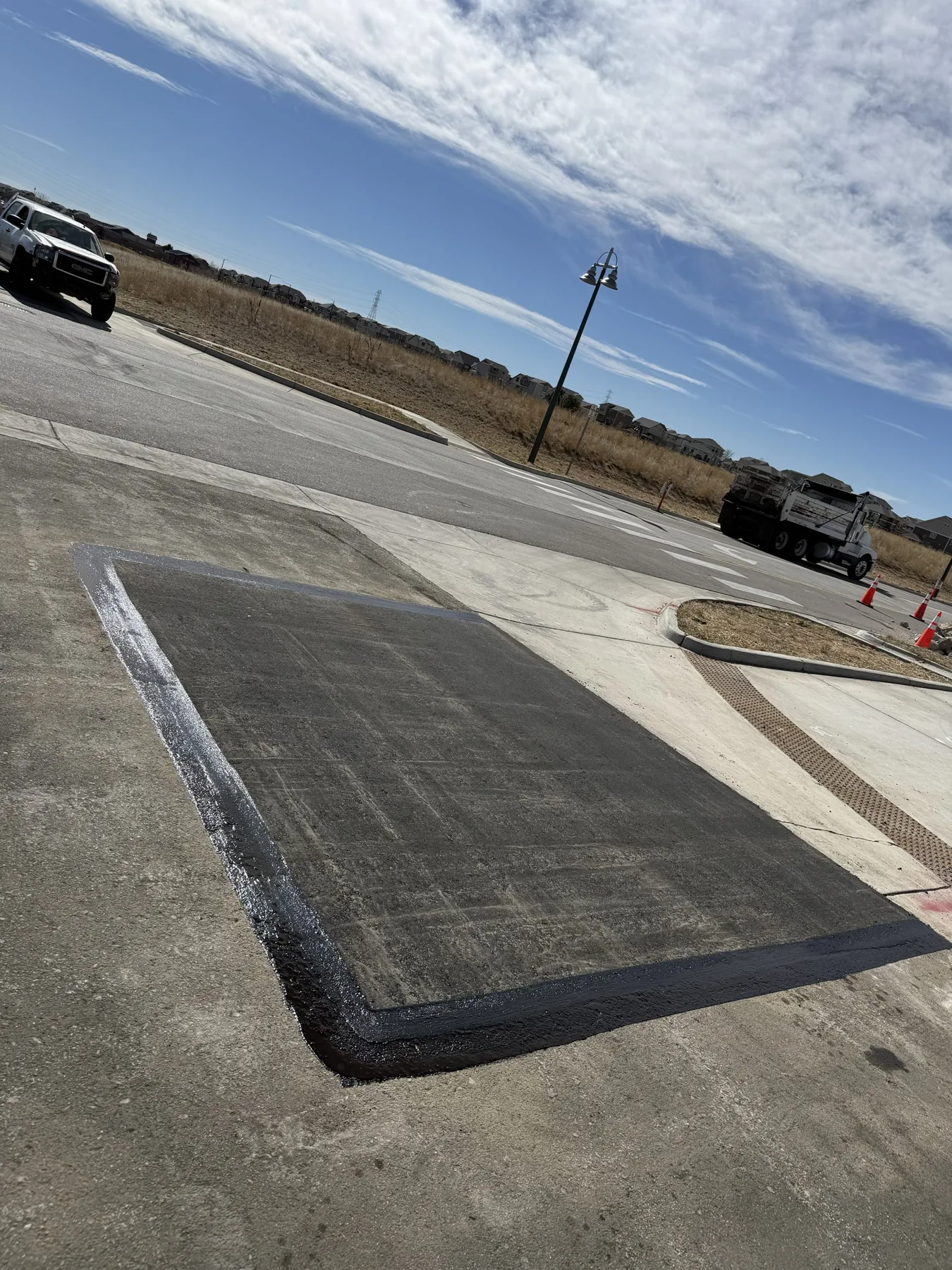
Why do potholes return after a repair?
A returning pothole can mean that the repair did not address the entire problem. The visibly missing asphalt is only one part of the condition. Surrounding pavement may also be weakened, water may continue to reach the area, or the support below may be unsuitable. Identifying which of those conditions exists is more useful than assuming that every failed patch has the same cause.
The Asphalt Institute's repair guidance describes potholes developing from deteriorating cracks, joints, and earlier patches. It emphasizes sound repair boundaries, stable support, drainage, and compaction. Those general principles explain why putting more material into the visible opening is not always enough for a lasting repair.
Colorado's freezing and thawing can contribute to the cycle. CDOT explains how water-affected pavement weakens and traffic breaks the damaged surface. However, winter is not a complete diagnosis. A leaking or poorly directed source of water, a recurring low point, or a change to heavier vehicles still deserves attention even when damage first becomes obvious in spring.
Bring the repair history to the contractor. If you know when the area was patched, what was removed, and whether support material was replaced, share those records. If you do not know, say so. An uncertain history should prompt investigation rather than an invented explanation of what the previous contractor did.
What should a property manager record before the site visit?
Create a location record that another person can find without you present. Name the area, such as the north entrance or loading approach, and mark it on a site plan. Take a close photograph and a wider photograph that shows nearby curbs, drains, cracks, and traffic routes. Record when the condition was observed and whether it changed after weather or use.
Note approximate dimensions from a safe position, but do not enter active traffic or unstable areas just to obtain measurements. Describe the vehicle movement at the location: straight travel, turning, braking, standing, or repeated delivery traffic. A passenger parking row and a truck turning area may place different demands on their pavement.
After rainfall, record where water collects and how it reaches the damaged area. Include irrigation overspray, downspouts, drainage structures, or nearby surfaces that direct runoff toward the lot. These are observations for the assessment, not proof of a particular cause. The contractor needs to evaluate the relationship between water and the pavement structure.
Document immediate access concerns separately from the permanent repair decision. Follow the property's procedures for restricting a hazardous area and arranging an appropriate route around it. Tell the contractor whether the opening is in a principal entrance or another location that affects access. An online inquiry does not establish an emergency response commitment or make a damaged area ready for use.
How is a temporary patch different from a planned repair?
A temporary patch is intended to address a near-term condition under the circumstances available. A planned repair can investigate the failure, remove affected material, address support where required, and restore the asphalt section. The distinction is the agreed purpose and scope, not simply whether someone calls the work a patch.
When immediate work is necessary, ask what the proposed method is expected to accomplish and what follow-up will still be needed. Record that answer with the maintenance history. This avoids treating a short-term measure as the completion of a larger repair that has not yet been designed or scheduled.
For planned work, request a description of removal boundaries, excavation, support correction, new asphalt, and compaction. Ask how the repair will meet the surrounding surface and manage water at its edges. These details help distinguish a proposal that restores the failed area from one that only fills the visible opening.
Weather, available materials, traffic control, and access can influence the practical options at the time. Avoid using a fixed online curing or reopening time for every product and condition. Follow the contractor's instructions for the specific repair. The MD Asphalt patching and repair page explains the service scope to discuss when arranging an assessment.
What would a useful repair history show?
Here is an illustrative record exercise, not an MD Asphalt job result. A manager gives a damaged entrance location the label E1. The record has five fields: observation date, photograph, visible condition, work performed, and follow-up observation. Use the same label each time so a later manager can trace the history instead of searching through unrelated invoices.
Suppose E1 receives a temporary fill, then shows a depression again after a later storm. The sequence establishes recurrence at the same location. It does not prove whether the material, drainage, support, or loading caused it. Add the weather observation and repair description to the record, then ask the estimator what evidence would distinguish those explanations.
If nearby locations E2 and E3 begin failing as well, map their relationship. Are they along a utility trench, a wheel path, or an area where water stands? A map may reveal a pattern that isolated close-up photographs miss. The next assessment can then focus on the affected corridor rather than treat each opening as an unrelated problem.
Keep measured repair quantities and dated completion photographs when work is finished. At the next inspection, compare the same locations. This simple method turns “we keep patching this lot” into a usable maintenance history. It also helps an owner determine whether new failures are in previously repaired sections or different areas of the property.
When should you consider a larger pavement project?
A broader assessment is useful when failures recur across several locations, damaged areas are expanding, or spot repairs are no longer resolving the underlying condition. It may also be needed when the property's vehicle use changes. The assessment should evaluate the full area affected, not assume that a particular number of potholes automatically requires replacement.
Ask the contractor to separate pavement that can remain from pavement that needs repair or reconstruction. The resulting plan might include targeted repairs, resurfacing after preparation, or rebuilding particular zones. The appropriate choice depends on support, thickness, drainage, traffic, and the extent of distress. Whole-lot replacement should have a clear technical reason.
Compare the complete scope rather than just the immediate patch total. If a resurfacing project is planned, identify which repairs must happen first and which temporary measures are justified until then. Coordinating the decisions can prevent the owner from ordering work without considering how it fits the longer-term project.
Our repair, resurface, or replace guide provides the treatment comparison. For budgeting, ask for work boundaries, quantities, assumptions, and exclusions. Do not rely on a percentage-of-damage rule copied from an article as a substitute for assessment of your actual parking lot.
How can you reduce surprises after the repair?
Before approving the work, clarify what the contractor believes caused the failure and what the repair will address. If the cause is still uncertain, ask what additional investigation is proposed. Confirm the process for documenting unexpected support conditions during removal and obtaining approval for a changed scope before the area is covered again.
At completion, keep the invoice and scope with the location record. Record any separate drainage or adjacent-surface work that remains outstanding. If water continues to collect because another part of the property has not been corrected, make that an explicit follow-up item. The pavement repair should not erase the rest of the maintenance discussion.
Build the repaired locations into routine property walks and checks after significant weather. Look for changes, photograph them, and compare them with the previous record. This is a practical observation routine, not a guarantee that every future defect can be prevented. A property-manager pavement plan helps keep those records and future work in one place.
This guide is for commercial property and HOA planning. It does not provide a DIY repair design or diagnose pavement from a photograph. To discuss work with MD Asphalt, send the Colorado address, photographs, approximate affected area, and any known repair history. Denver and Front Range sites are the regular service focus; larger scopes elsewhere in Colorado are reviewed for travel and scheduling.
Common questions
Can sealcoating fix a pothole?
No. A pothole involves missing or failed pavement that needs an appropriate repair. Sealcoating is not a replacement for asphalt or failed support material. If coating is part of a broader maintenance project, the repair scope should be determined first so surface work does not conceal an unresolved problem.
Why is the proposed repair larger than the visible hole?
The visible opening may be surrounded by weakened or broken pavement. A repair may need to extend to sound boundaries and address support below the surface. Ask the contractor to mark the proposed limits and explain the reason for them, including how any additional damage found during removal will be documented.
Do returning potholes always mean poor workmanship?
No. Recurrence can involve water, weak support, traffic demands, repair scope, or execution. A temporary repair may also have served a limited purpose. Review the original scope and site conditions before assigning a cause. A useful assessment identifies the evidence for the recommended correction and any uncertainty that remains.