Choose the right paving scope
Asphalt Companies in Colorado
Comparing contractors for a parking lot, access road, or commercial repair? MD Asphalt Co. helps property teams assess the pavement, define the work, and plan access. Compare our completed projects and service coverage, then bring us your address, site concerns, and timing.
Is MD Asphalt a fit for your property?
| Your project | Where we fit | Start here |
|---|---|---|
| Occupied commercial property | Parking lots, repairs, and resurfacing with access planning | Property management |
| Road or larger paving project | Front Range work and statewide travel for larger scopes | Road paving |
| Isolated pavement damage | Assessment of the failure and appropriate repair limits | Patching and repairs |
Project acceptance and scheduling depend on the address, scope, and availability.
Why consider an owner-led Fort Lupton contractor?
A contractor search usually starts with a symptom: broken pavement at an entrance, a worn parking field, or a roadway that needs resurfacing. The useful next step is to connect that symptom to a defined scope. Ask what has been observed, what preparation is needed, and which parts of the recommendation still depend on an on-site assessment. A company name and a square-foot price cannot answer those questions by themselves.
Our customers include property managers, HOA communities, general contractors, municipalities, and commercial facilities. Each brings different operating constraints. A retail property needs customer access; an HOA needs resident communication; a construction site needs coordination with the general contractor. Tell us which constraints govern your job before the scope is finalized.
You can reach the team at (720) 307-1296. Read the MD Asphalt company story and ask who will handle your estimate, scheduling questions, and project updates. Confirm the contact for changes before work starts, especially when an owner, manager, and site representative all have different approval responsibilities.
Which pavement work should you ask a contractor to price?
For a few failed areas, ask how the proposed repair limits were selected and what happens if weak material is uncovered. For a worn parking field, ask whether the supporting pavement can remain useful and how finished elevations will meet drains, curbs, and entrances. For extensive failure, ask what investigation supports rebuilding and whether different zones need different treatments. Your lot may need more than one approach.
Our paving service page explains new paving and resurfacing. Asphalt milling may form part of the preparation when material needs to be removed before an overlay. Keep the proposed depth, repair allowances, and finished surface requirements in the written scope. Have every bidder use the same marked work area, so one proposal does not include a drive lane that another has left out.
The Asphalt Institute’s repair guidance identifies drainage, pavement thickness, wear, and supporting material among the issues behind pavement failures. Its pothole guidance calls for removing failed material to firm support and addressing contributing water problems. These are reasons to ask about preparation, rather than assume every damaged surface needs the same treatment.
For a fuller treatment comparison, read Repair, Resurface, or Replace Your Colorado Parking Lot? Bring previous repair records when the same spot keeps failing. A record of where and when damage returned gives an estimator a better starting point than an isolated close-up photograph.
Where can MD Asphalt take on Colorado paving work?
Properties in Denver Metro, Boulder, Longmont, and Northern Colorado can begin with an address and a description of the pavement concern. Include the property use and approximate work area. A shopping center, warehouse, community road, and small private driveway each need a different scope discussion even when the addresses are nearby.
For larger work in Southern Colorado, the mountains, the Western Slope, or the eastern plains, send plans or measured limits if you have them. Include a proposal deadline, anticipated construction window, and the site contact. The team can review whether travel fits the project before you spend time arranging a site visit. Statewide capability does not mean every small repair can be accepted at every address.
Location also belongs in the operating plan. Explain delivery restrictions, narrow approaches, limited staging space, and any routes that need to remain open. Ask how those constraints affect mobilization and the proposed sequence. Confirm the scheduling assumptions in the proposal instead of treating a general service-area statement as a promised start date.
Use the Colorado service-area directory to find your region. If you are managing several properties, provide each address separately with its own priorities. One portfolio-wide budget should still distinguish the work and access requirements at each site.
What should you compare in written paving proposals?
| Scope item | Ask the contractor | Why it affects your decision |
|---|---|---|
| Work limits | Which measured areas are included? | Different boundaries make totals hard to compare. |
| Preparation | What removal, base repair, and drainage work is included? | The new surface depends on the preparation beneath it. |
| Pavement section | What material and finished section are proposed? | The specification should match the intended use. |
| Access and markings | Which closures, phases, and final markings are included? | Reopening requires an operating plan as well as paving. |
| Changes and exclusions | Who approves added work, and what is outside this price? | Unclear assumptions become difficult decisions during construction. |
Ask for an explanation when proposals recommend different treatments. An overlay proposal and a full-depth replacement proposal are different construction plans. The next question is what evidence supports each one. A contractor should be able to connect the recommended work to pavement condition, vehicle use, and the required finished elevations. Request clarification while there is time to revise the scope.
Keep a separate note for conditions that cannot be fully confirmed before removal. Discuss the allowance or pricing method for additional base work and the person authorized to approve it. Also request the proposed contract terms, relevant insurance documentation, and any project-specific warranty terms. Have the appropriate authority confirm requirements that depend on the project or jurisdiction.
What can you verify in our published project gallery?
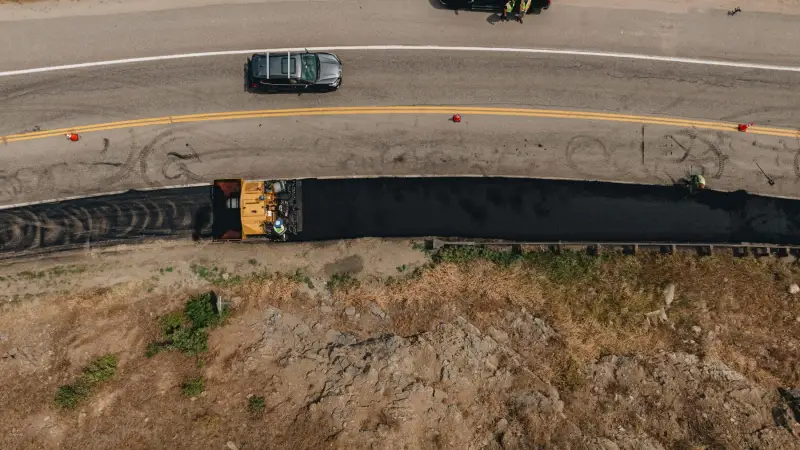
For this page, we reviewed the existing MD Asphalt gallery and selected the three published examples below: “Mountain corridor milling,” “Roadway resurfacing,” and “Full-depth street repair.” These are the gallery’s existing project labels. The review connects visible types of work to contractor-selection questions; it does not establish project size, pavement thickness, price, completion date, or long-term performance.
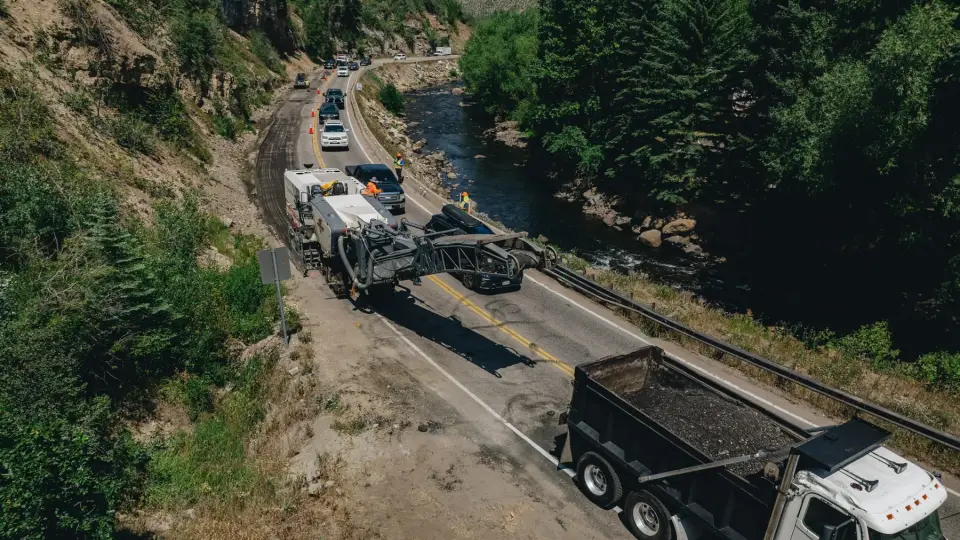
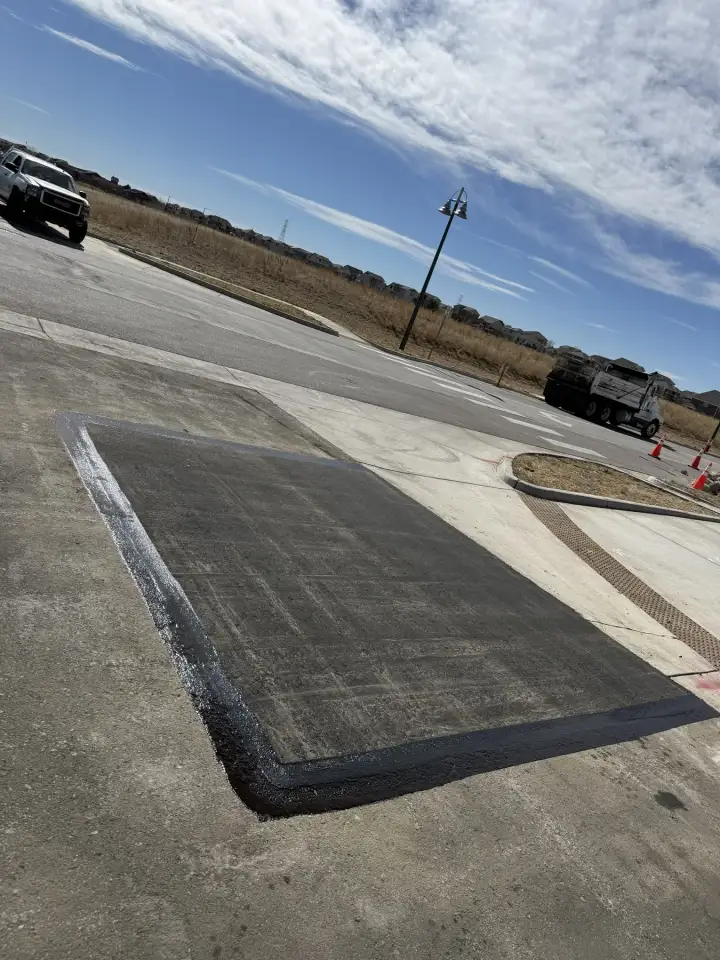
A milling photograph can help you ask about removal limits, staging, and the relationship to the overlay that follows. A resurfacing photograph can begin a discussion about transitions and the finished roadway. A repair photograph can help you identify the kind of localized work you are requesting. The picture is the starting point; ask what preparation and coordination the job actually required.
View the full project gallery and watch MD Asphalt’s work videos. Look for examples of the surface, setting, and access constraints closest to your property. Ask which references can discuss the scope and communication. A clean finished surface is useful evidence to inspect, but a photograph alone cannot show the condition of the base or how a project has performed over time.
How should an occupied property plan paving access?
Map the areas that can close together and those that cannot. Include trash collection, loading areas, resident parking, tenant opening times, and any other recurring activity that uses the pavement. Ask who will place closure notices and who will tell occupants when a phase changes. A practical sequence needs agreement between the property team and the contractor before equipment arrives.
Discuss the conditions for reopening each area with the actual materials and work proposed. Paving, sealcoating, repairs, and markings can have different requirements. Ask for project-specific instructions and communicate them to occupants. Avoid substituting an online rule of thumb for the contractor’s directions at your property. Where access cannot be maintained during a stage, establish the alternative in advance.
Water and seasonal conditions belong in that discussion. CDOT explains how freezing and thawing water weakens pavement and how traffic breaks weakened areas into potholes. That general mechanism supports checking drainage and recurring damage; it does not diagnose a specific parking lot. Photograph both the damaged spot and its surroundings so the site discussion includes water movement and vehicle paths.
Our Denver commercial repair guide covers patching and crack sealing. For continuing upkeep, use the property-manager maintenance plan to organize observations and future work after the immediate project is complete.
What do Colorado property teams ask before choosing a contractor?
01How do I choose a Colorado asphalt paving company?+
Start with the type of property and work required. Review comparable projects, confirm service coverage for the address, and ask for a written scope covering preparation, pavement work, access, and exclusions. Ask who will coordinate the project and how unexpected conditions will be handled. MD Asphalt welcomes those questions before a paving proposal is approved.
02Does MD Asphalt work throughout Colorado?+
Regular service focuses on Denver Metro, the Front Range, and Northern Colorado. Statewide travel for larger projects is available after reviewing the location, size, scope, and schedule. Send the property address and project information to confirm fit. A listed city does not promise immediate availability, and a small repair outside the regular service area may require a different local contractor.
03What should an asphalt paving estimate include?+
A useful estimate identifies the work area, proposed treatment, removal and preparation, base repairs or allowances, pavement section, transitions, markings, and access arrangements. It should also identify exclusions, scheduling assumptions, and how changes will be approved. The detail depends on the project. Compare proposals against the same site information so a lower total does not hide a different scope.
04Can a commercial property stay open during paving?+
Phasing may preserve some access when the property layout and work allow it. Identify tenant entrances, delivery routes, pedestrian access, and required parking before agreeing to a sequence. Some areas will need to close. Confirm how each phase will reopen and who will communicate changes; continuous access to every entrance cannot be assumed.
Start your project
Bring your property into the comparison
Talk with MD Asphalt about the pavement, the work you need, and the access your property must keep. Request a site assessment or call the Fort Lupton team.